When your vehicle breaks down and requires towing to a workshop, one of the first questions you should ask is: "Are you sending a flatbed recovery truck or a wheel-lift towing truck?"
In years past, almost all cars were front-engine, manual-transmission vehicles that could be towed simply by hooking the front bumper and letting the rear wheels roll along the road. Today's automotive landscape is vastly different. Modern vehicles feature complex dual-clutch transmissions (DSG/DCT), continuously variable transmissions (CVT), multi-link all-wheel-drive (AWD) systems, low-slung aerodynamic bumpers, and high-voltage electric drivetrains.
Choosing the wrong towing method can turn a minor ₹2,000 sensor repair into an catastrophic ₹2,00,000+ gearbox replacement. Here is what every vehicle owner in Idukki needs to know.
What Is Flatbed Towing?
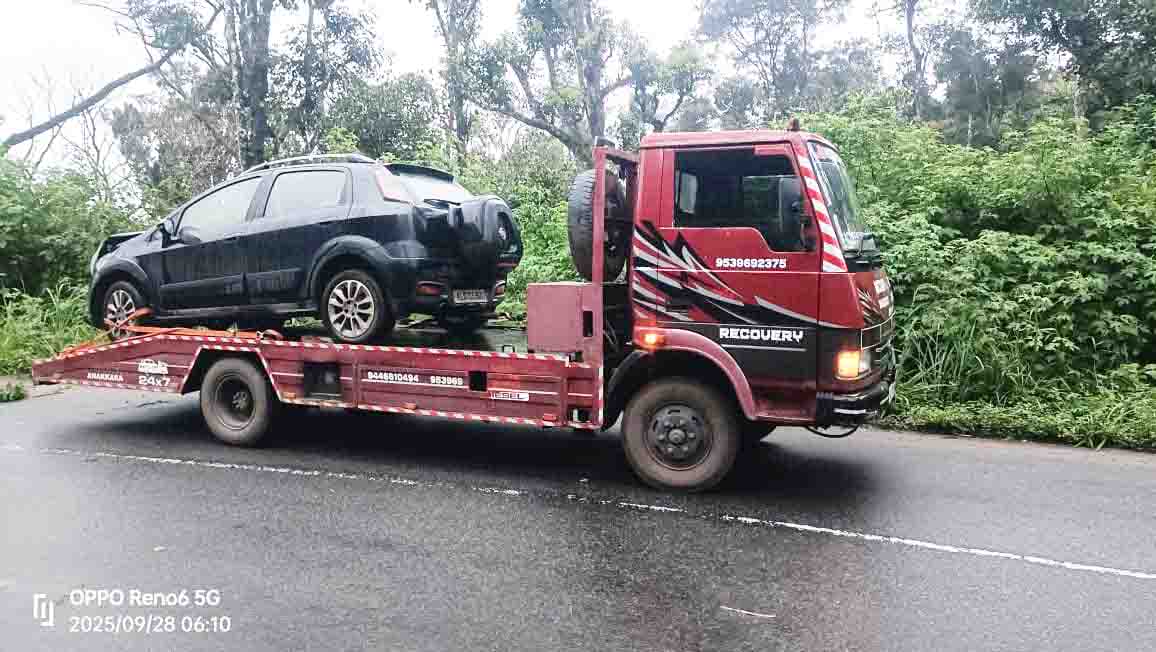
A flatbed recovery truck (also known as a rollback carrier) is equipped with a long, hydraulically operated steel bed. The entire bed tilts and slides backward until it contacts the ground at a shallow incline. The disabled vehicle is gently winched up onto the platform and secured using heavy-duty, soft polyester wheel chocks and 8-point tension straps.
Crucial Benefit: All four wheels of your vehicle sit completely stationary on the truck bed. There is zero rolling friction, zero tire wear, and zero movement in the vehicle's transmission, driveshafts, or differentials.
What Is Wheel-Lift Towing?
A wheel-lift towing truck uses a hydraulic boom fitted with metal cradles that slide under either the front or rear drive tires. The boom lifts one end of the car into the air, allowing the opposite two wheels to roll along the road surface as the truck drives.
Crucial Benefit: Wheel-lift trucks are more compact and maneuverable. They can back into tight parking basements, negotiate sharp high-range hairpin curves, and position themselves to winch vehicles out of ditches where a longer flatbed carrier physically cannot turn around.
Why Modern Cars Require Flatbed Towing
1. Automatic Transmission Vehicles (CVT, Torque Converter, DCT/DSG)
In an automatic car, the transmission fluid pump that lubricates the internal planetary gears and wet clutch packs is driven directly by the vehicle's engine. When the engine is off and the drive wheels are forced to roll on the highway during towing, the internal gearsets spin rapidly with zero oil pressure and zero cooling.
Within just 10 to 15 kilometers of conventional two-wheel towing, the friction clutches overheat, glaze over, and can suffer complete internal seizure.
2. Electric Vehicles (EVs - Tata Nexon EV, MG ZS EV, Hyundai Ioniq, etc.)
Unlike combustion engines that can be shifted into neutral to mechanically disconnect the crankshaft, modern EVs utilize Permanent Magnet Synchronous Motors (PMSM) directly coupled to the reduction gearbox. When the drive wheels rotate, the motor acts as an electrical generator, producing high-voltage "back-EMF" (electromotive force).
If the vehicle's high-voltage contactors are open while rolling, this uncontrolled generated voltage can spike and destroy the onboard power inverter or electrical management system. EV manufacturers explicitly mandate flatbed towing only.
3. All-Wheel-Drive (AWD) & 4x4 SUVs (Thar, Scorpio-N, Fortuner, XUV700, Audi Quattro)
AWD vehicles have all four wheels permanently or electronically linked through a center differential, viscous coupling, or transfer case. If two wheels are lifted on a wheel-lift truck while the other two roll on the ground, the immense speed differential across the center coupling generates extreme heat, rapidly melting the differential clutches.
4. Low-Clearance Sedans & Luxury Marques
Cars like BMW 3/5 Series, Mercedes C/E Class, and sports sedans feature low ground clearance and delicate front aerodynamic splitters. Traditional underlift arms can crack front bumpers and damage exhaust catalytic converters. The shallow approach angle of our hydraulic rollback flatbed guarantees zero body contact.
When Is Wheel-Lift Towing the Superior Choice?
While flatbed towing is the gold standard for long-distance transit and sensitive drivetrains, wheel-lift recovery trucks shine in specific mountain scenarios:
- Steep Hairpin Ditch Pulls: The shorter wheelbase allows our recovery crane to position itself at optimal winching angles on narrow mountain curves.
- Narrow Village & Estate Lanes: Negotiating tight tea estate shortcuts in Vandiperiyar or Anavilasam where an 8-meter flatbed cannot turn.
- Front-Wheel-Drive (FWD) Manual Cars: If your manual Swift or i20 breaks down and the front drive wheels are lifted into the cradle, the rear non-driven wheels can safely roll on short local hops to a nearby garage.
Why Jo Recovery Operates Both Types of Recovery Vehicles
At Jo Recovery Van Service in Anakkara, we don't believe in a one-size-fits-all compromise. We operate both a heavy hydraulic roll-back flatbed carrier and a heavy-duty wheel-lift recovery truck. When you call us, our dispatchers ask for your vehicle make, model, and location to send the precise equipment your car requires.
Need Advice on Towing Your Car?
Call our team now for free professional advice and 24/7 emergency dispatch anywhere in Idukki.